
The Short Version
- An upright headstone is a vertical memorial that stands above the ground, usually made of two granite pieces — a die (or tablet) that carries the inscription and a base it rests on, set on a concrete foundation.
- Upright monuments come as single memorials for one person or companion memorials that honor two people, most often a husband and wife, on one shared stone.
- Most single upright headstones cost between $1,500 and $4,000, and companion uprights generally run $3,000 to $6,000, before cemetery foundation and installation fees of roughly $300 to $800.
- Popular top styles include serpentine, oval, rooftop, flat, and corner rounds, and each side of the die offers roughly 300 to 500 square inches for names, dates, verses, symbols, and portraits.
- We design and craft custom upright headstones and monuments for families across Northeast Ohio, handling cemetery approval, the foundation, and installation from our home in Hudson.
What Is an Upright Headstone?
An upright headstone is the memorial most people picture when they imagine a cemetery — a stone that stands tall and vertical, rising above the grass so it can be seen and read from a distance. It is the classic, enduring form of remembrance, and for many families it feels the most fitting way to mark a life. Where a flat marker rests level with the lawn, an upright monument holds a loved one’s name up to the light, offering a place to stand, reflect, and return to for generations.
Choosing a memorial is one of the most personal decisions a family ever makes, and it deserves clear, gentle guidance rather than a sales pitch. This guide walks through what an upright headstone is made of, the styles and sizes to consider, honest 2026 pricing, and how cemetery approval works — so you can picture the right memorial without feeling rushed. If you are weighing an upright against a lawn-level option, our guide to flat grave markers is a helpful companion to this one.
a well-crafted granite upright monument can stand crisp and readable for centuries with almost no upkeep
Headstone vs. Monument: A Quick Word on Terms
Families often ask whether they need a “headstone” or a “monument,” and the honest answer is that the words overlap. In everyday use, headstone, gravestone, and tombstone all describe a marker at a grave. In the monument trade, the word monument usually refers to a larger or more elaborate upright memorial, while headstone tends to describe a more modest one. There is no rule you must follow. What matters is choosing a memorial that honors your loved one and meets your cemetery’s guidelines — whether you call it a headstone or a monument.
The Parts of an Upright Monument
Understanding the anatomy of an upright memorial makes the whole decision feel less overwhelming. Nearly every upright is built from a few simple parts, and knowing them helps you talk through design and pricing with confidence.
The Die (or Tablet)
The die — also called the tablet — is the upright piece that most people think of as the headstone itself. It is the visible face of the memorial and where personalization comes fully to life: names, dates, an epitaph, religious symbols, and sometimes a portrait or scene are carved into it. Because it is the heart of the memorial, the die is where families spend the most time on inscription wording and lettering style.
The Base
The base is the horizontal platform the die rests on. It lifts the tablet so the inscription sits comfortably at eye level and gives the monument its grounded, balanced proportions. Many bases also carry the family surname, so a single shared name reads across the memorial while individual names appear on the die.
The Foundation
Beneath the visible stone lies the foundation — usually a poured concrete footing set into the ground. Though no one sees it, the foundation is what keeps an upright level and stable as the soil freezes and thaws through Northeast Ohio winters. A properly poured foundation prevents the monument from tilting or settling over the years, which is one reason professional installation matters so much.
Optional: The Plinth
For a more elaborate design, a plinth can be added between the base and the die. This extra tier adds height and a layered, distinguished look. Vases, carved accents, or a companion sub-base can round out the design when a family wants something more substantial.
A simple way to remember it: the die carries the story, the base holds it up, and the foundation keeps it standing straight for a lifetime. Everything else is a personal touch.
Single vs. Companion Upright Headstones
Upright memorials come in two main configurations, and the right one depends on whom you are honoring.
A single upright headstone honors one person. The die is typically sized for one name, with room for dates, a verse, and a symbol or image. It is the most common choice and the most affordable upright option.
A companion upright monument honors two people on one shared stone — most often a husband and wife, but also siblings, partners, or parents. A wider die carries both names side by side, often beneath a shared family surname on the base. Many couples choose a companion memorial while both are living, adding the second date later. Because it uses one larger stone instead of two separate markers, a companion upright often costs less than two singles. Our full guide to double headstones for husband and wife walks through companion designs in detail.
Popular Upright Headstone Top Styles
The shape of the top edge gives an upright much of its character. All of these are equally durable — the choice is purely one of feeling and taste.
| Top Style | Character |
|---|---|
| Serpentine | A gentle S-curve across the top — the most popular style, soft and graceful. |
| Oval / Half-Round | A smooth rounded top with a classic, timeless feel. |
| Rooftop / Cathedral | A peaked top that lends a dignified, upright presence. |
| Flat / Square | Clean, level lines for a modern or understated look. |
| Corner Rounds | Softly rounded corners on an otherwise flat top — simple and elegant. |
Beyond the top edge, the die itself can be shaped into hearts, crosses, books, or other forms, and the edges can be polished smooth or left with a natural rock-pitched face. If a particular symbol or motif held meaning for your loved one, it can be carved or etched into almost any of these shapes.

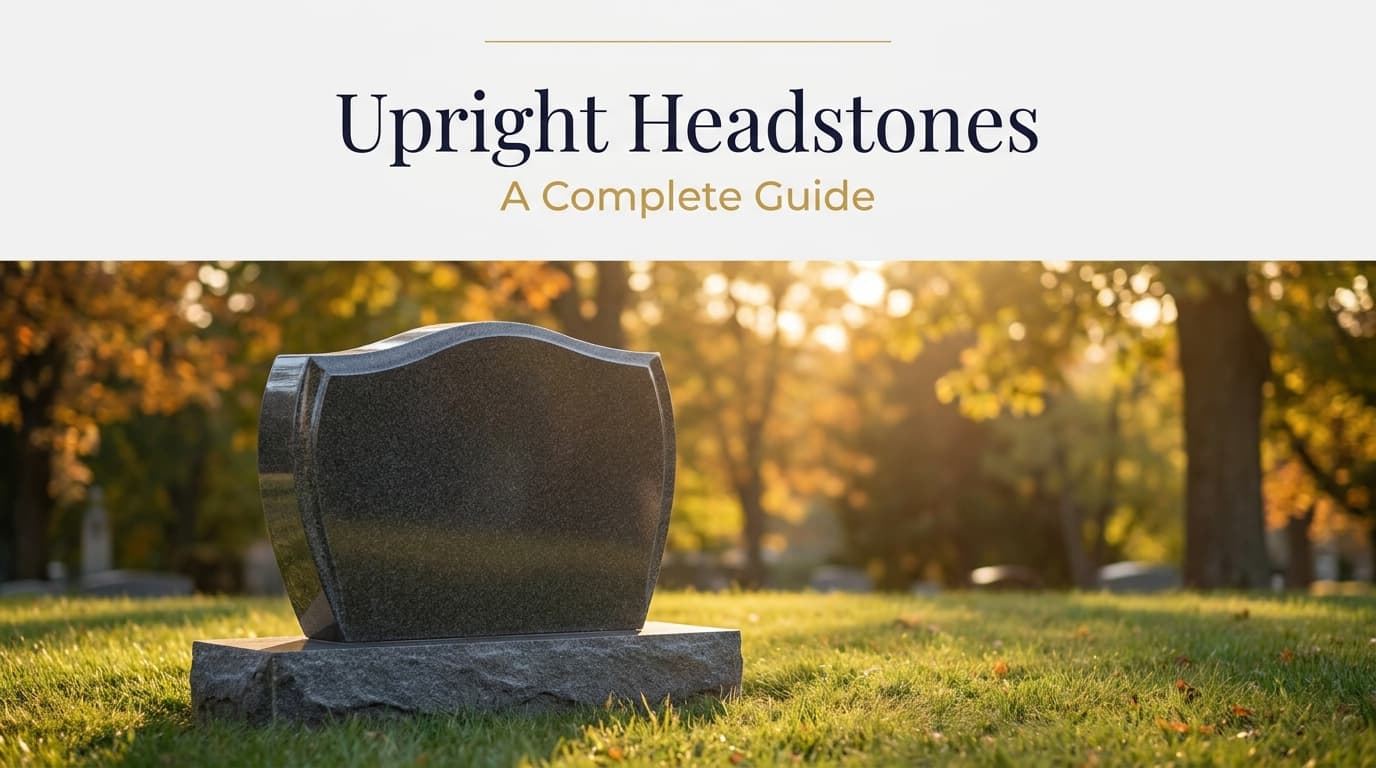
Upright headstones at a glance: the parts of a monument, single versus companion layouts, top styles, and what families typically pay in 2026.
Materials and Finishes
Nearly all upright headstones today are made of granite, and for good reason. Granite is one of the hardest, least porous stones on earth, so it shrugs off rain, frost, and time while holding a crisp inscription for centuries. It also comes in a wide palette of colors — gray, black, blue, red, and brown — that lets each memorial feel personal. Our complete guide to granite headstones breaks down the color families and what they cost.
The finish shapes how the stone reads. A polished surface is glossy and deepens the color, making it the ideal canvas for a laser-etched portrait or scene, especially on dark granite. A honed finish is smooth but matte and understated. Frosted or sandblasted areas create a lighter, textured contrast that shapes lettering and borders, while a rock-pitched edge leaves the natural face of the stone exposed for a strong, timeless character. Most uprights combine two or three finishes on one stone.
Standard Upright Headstone Sizes
Upright dimensions vary, but a few standard sizes cover most memorials. A single upright die commonly measures around 24 inches wide, 6 inches thick, and 24 to 36 inches tall, set on a base roughly 30 to 36 inches wide. A companion upright is typically wider — often 36 to 48 inches or more across — to hold two names comfortably. Each side of the die offers roughly 300 to 500 square inches of space, which is plenty for full names, dates, an epitaph, symbols, and even a portrait.
The most important thing to know is that your cemetery sets the limits. Many cemeteries specify maximum height, width, and base dimensions for a given plot, and some sections only permit flat markers. Before finalizing a design, it is always worth confirming the rules — our overview of choosing a headstone size for a cemetery plot explains how to match a memorial to the space, and we confirm every requirement for you before anything is carved.
What Upright Headstones Cost in 2026
Cost is one of the first questions families have, and it deserves a clear, honest answer. The price of an upright depends on its size, the granite color, the finish, and how much carving or etching the design includes. Here is what families typically invest in 2026.
| Type of Upright | Typical 2026 Range |
|---|---|
| Single upright, basic design | $1,500 – $4,000 |
| Companion (double) upright | $3,000 – $6,000 |
| Custom carving, etching, or premium color | $6,000 and up |
| Cemetery foundation & installation | $300 – $800 (usually separate) |
An upright generally costs more than a flat marker because it uses more stone and requires a foundation, but many families feel the visible, standing presence is worth it. For a full breakdown of every factor that shapes price — from lettering to shipping — see our complete headstone cost guide. We are always glad to give a clear, itemized estimate so there are no surprises.
A memorial is not an expense so much as a lasting tribute — a stone that will carry your loved one’s name gently forward for generations. We help families across every budget find a design that feels right and endures.
Cemetery Approval and Installation
Before an upright monument can be placed, the cemetery must approve the design and the foundation must be poured. Every cemetery has its own rules about the size, style, and placement of memorials, and in Northeast Ohio those rules can differ from one cemetery — even one section — to the next. Navigating this is where a local monument maker earns their keep.
When you work with us, we handle the entire process: confirming your cemetery’s requirements, preparing the paperwork, pouring the foundation, and setting the memorial with care. You can read more about the local landscape in our guide to cemetery regulations in Northeast Ohio, and you can check whether we serve your cemetery on our cemeteries we serve page. We work with more than 4,100 cemeteries across Ohio, from Hudson and Stow to Akron, Cleveland, and beyond.
How to Choose the Right Upright Headstone
With so many choices, it helps to move through the decision one gentle step at a time. Here is a simple roadmap families find reassuring.
1. Confirm the cemetery’s rules first. Knowing the allowed height, width, and base size narrows every other choice and prevents disappointment. We will gather these details for you.
2. Decide between single and companion. Are you honoring one person or planning a shared memorial for a couple? This shapes the size and layout of the die.
3. Choose the stone and finish. Pick a granite color and finish that feel right — classic gray, striking black, or a warmer tone — keeping in mind how the inscription will read against it.
4. Shape the top and design. Select a top style and any carved shapes, borders, or symbols that reflect your loved one’s faith, passions, or personality.
5. Write the inscription. Choose the names, dates, and words that will be read for generations. There is no need to rush this — we help families find wording that feels true.
Once the memorial is placed, keeping it beautiful is simple. A gentle, occasional cleaning is all granite needs — our guide on how to clean a headstone shows the safe way to do it.
Crafted With Care in Hudson, Ohio
Reserve Memorials is a family-owned company based in Hudson, Ohio — your neighbors, not a faceless catalog. We design and craft custom upright monuments and headstones for families throughout Northeast Ohio and the Greater Akron-Cleveland area, guiding you from the first sketch through cemetery approval, foundation, and installation. Every memorial we make is meant to reflect the life, legacy, and love of the person it honors.
If you are beginning to think about an upright headstone for a loved one — or planning ahead for yourself or a spouse — we would be honored to help. There is no pressure and no rush, only a caring conversation about what feels right for your family.
Frequently Asked Questions