

The Short Version
- A cremation urn is a container that holds a loved one’s ashes. It can rest at home, be placed in a columbarium niche, be buried, or be used to scatter remains.
- Sizing is simple: plan for roughly one cubic inch of capacity per pound of body weight before cremation. The standard adult urn holds about 200 cubic inches.
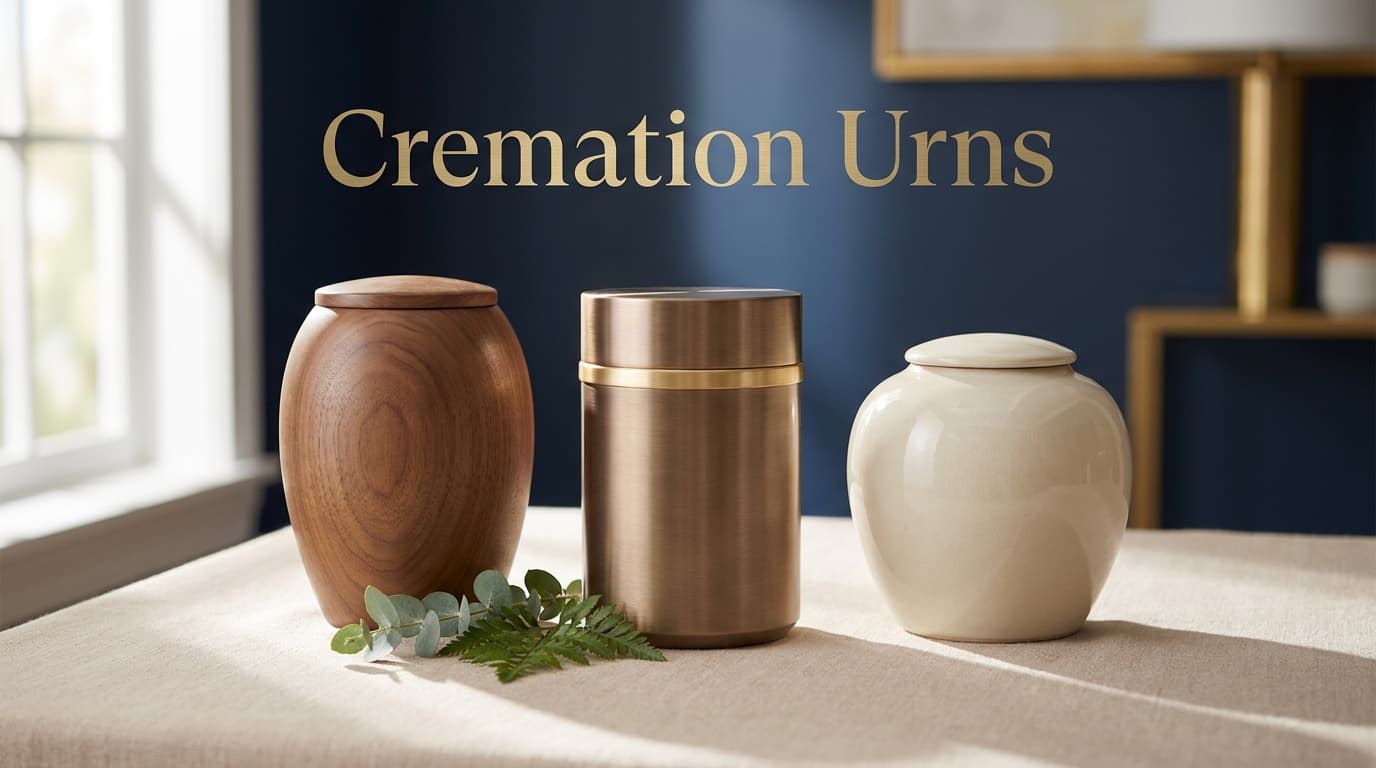
- Urns come in metal, wood, ceramic, stone, glass, and biodegradable materials — plus companion urns for couples and small keepsake urns for sharing among family.
- In 2026, most families spend $50–$300 on a standard urn; the NFDA reports a median urn cost of $295. Artisan and bronze urns run higher.
- With the U.S. cremation rate now above 63%, choosing the right urn — and a meaningful place for it to rest — is one of the most common memorial decisions families face.
What Is a Cremation Urn? A Gentle Introduction
When a family chooses cremation, one of the first tender questions that follows is, “Where will their ashes rest?” A cremation urn is the answer to that question — a vessel, crafted with care, that holds and protects a loved one’s cremated remains. More than a container, an urn becomes a quiet keeper of memory: it may sit on a mantel where the family gathers, rest behind a polished granite front in a columbarium, be lowered gently into the earth, or carry ashes to a meaningful place for scattering.
Cremation has become the path most American families now walk. According to the National Funeral Directors Association’s 2025 Cremation & Burial Report, the U.S. cremation rate reached 63.4% in 2025 and is projected to climb to 82.3% by 2045. That means choosing urns for ashes is no longer a rare decision — it is one nearly every family will face, often during a season of grief when even small choices can feel overwhelming.
This guide is here to make that choice a little gentler. We’ll walk through how to size an urn correctly, the materials and styles available, realistic 2026 costs, options for couples and families, and the many places an urn can rest. If cremation is part of a larger plan, our complete guide to columbariums and our overview of mausoleums and above-ground burial are helpful companions.
How to Choose the Right Urn Size
Of all the decisions families ask us about, urn size causes the most quiet worry — and the good news is that it follows one simple rule. Plan for about one cubic inch of urn capacity for every pound of body weight before cremation. If your loved one weighed 180 pounds, look for an urn that holds at least 180 cubic inches.
Because of this rule, the Cremation Association of North America (CANA) established that the standard adult urn capacity is 200 cubic inches, which comfortably suits most adults. When in doubt, size up rather than down — a slightly roomier urn spares families the heartache of remains that don’t quite fit, and accounts for larger body frames, greater bone density, or the temporary bag and container the crematory provides.
| Urn Type | Typical Capacity | Who It Suits |
|---|---|---|
| Keepsake urn | Under 50 cubic inches | A small portion shared among family members |
| Child or infant urn | Varies by need | An infant or child, sized with compassion |
| Standard adult urn | About 200 cubic inches | Most adults (CANA standard) |
| Companion urn | 350–420 cubic inches | Two people resting together |
The standard adult urn capacity set by CANA — roughly one cubic inch per pound of pre-cremation body weight
Types of Cremation Urns by Material
The material of an urn shapes its character, its cost, and how it will be used. There is no single “right” choice — only the one that feels true to the person you are honoring. Here are the most common types of urns families consider.
Metal Urns
Brass, bronze, aluminum, and stainless steel urns are prized for their durability and reliable threaded lids. They hold up beautifully to handling, moving, and long-term display, which makes them a dependable choice whether the urn will rest at home or be placed in a niche. Bronze urns sit at the premium end and can reach $3,000, while many handsome metal options remain modestly priced.
Wood Urns
Crafted from oak, walnut, cherry, maple, or bamboo, wooden cremation urns read as warm and familiar — many families say they feel like a piece of fine furniture. They are a favorite for home display and can be personalized with engraving or inlay. Wood urns typically range from about $60 to $800 depending on the wood and craftsmanship.
Ceramic and Glass Urns
Ceramic and hand-blown glass urns offer color, artistry, and a deeply personal touch. A simple ceramic urn is very affordable, while hand-glazed, hand-painted, or artisan pieces move into premium territory because of the labor involved. Glass urns generally run $100 to $400, with custom designs costing more. These pieces shine when a family wants the urn to reflect a loved one’s personality and favorite colors.
Stone and Cultured Marble Urns
Urns cut or cast from granite, marble, or cultured stone carry the same enduring quality families love in a granite headstone. They are weighty, substantial, and especially well suited to placement in a columbarium niche or to burial, where permanence matters most.
Companion, Keepsake, and Specialty Urns
Beyond the standard single urn, several thoughtful options help families honor relationships and share remembrance.
- Companion urns are sized to hold the remains of two people — most often a husband and wife — in a single vessel. To estimate capacity, add both pre-cremation weights and choose a size comfortably above the total; a couple of 160 and 190 pounds would start at 350 cubic inches and round up. Couples drawn to resting together may also appreciate our guide to double headstones for husband and wife, where the same wish for togetherness applies.
- Keepsake urns are small vessels that hold a portion of ashes, allowing several family members each to keep a piece of their loved one near. They are a gentle solution when relatives live far apart or when the family wishes both to bury and to keep.
- Veteran and themed urns honor a life’s passions — military service, faith, the outdoors, a beloved hobby. Families of those who served may also wish to review our guide to VA headstones and veteran memorial benefits.
Biodegradable and Eco-Friendly Urns
For families who feel drawn to nature, biodegradable urns offer a tender way to return a loved one to the earth or water. Made from materials like recycled paper, sand, salt, cornstarch, or plant fibers, these urns break down naturally over time. Some are designed for green burial in the ground; others are made to float briefly and then dissolve gently in water; and a special category — living urns — nurtures a tree or plant that grows from the remains, turning a resting place into something living.
Biodegradable urns typically range from about $50 to $295. If your family is considering a green burial or scattering, it’s wise to confirm the rules of your chosen location first — our overview of cemetery regulations in Northeast Ohio explains why checking ahead spares families difficulty later.
How Much Do Cremation Urns Cost in 2026?
Urn pricing spans a wide range, because it reflects material, craftsmanship, and personalization rather than a single standard. The encouraging truth is that a beautiful, dignified urn is within reach of nearly every family. Drawing on current industry pricing, here is what families can realistically expect in 2026.
| Urn Category | Typical 2026 Price Range |
|---|---|
| Keepsake urns (each) | $20 – $100 |
| Biodegradable / eco urns | $50 – $295 |
| Standard urns (wood, metal, ceramic, stone) | $50 – $300 |
| Designer / artisan / custom urns | $300 – $1,000+ |
| Companion urns | $150 – $600+ |
| Premium bronze urns | up to $3,000 |
The national median cost of a cremation urn, according to the NFDA — a helpful center point for most families
We gently encourage families to think of an urn not as an expense but as an investment in a lasting tribute — the vessel that will hold a lifetime of memory. Buying directly from a funeral home is convenient, but you are never obligated to; families are free to choose an urn from a memorial provider, and many appreciate the personal guidance that comes with working alongside a local, family-owned team.
Good to know: Under federal law, a funeral provider cannot charge you a handling fee for using an urn you bought elsewhere. You are always free to choose the vessel that feels right for your loved one.
Where the Urn Will Rest: Niche, Burial, Home, or Scattering
Choosing an urn and choosing where it will rest go hand in hand — and the place often guides the material. Families generally consider four meaningful options.
- A columbarium niche. Many families place an urn behind a polished granite, marble, or glass front in a columbarium — a permanent, dignified place to visit and remember. Our columbarium guide covers niche sizes, costs, and memorial options, and our columbarium design services show what we craft for Ohio cemeteries.
- Urn burial. A burial urn can be placed in a cemetery plot, often alongside a spouse, and marked with a flat marker or upright stone. Some cemeteries allow two urns in a single plot, and an urn vault may be required — another reason to confirm local cemetery rules early.
- At home. Keeping a loved one close on a mantel or shelf brings comfort to many families. Wood, ceramic, and metal urns are especially suited to home display.
- Scattering. Some families choose to scatter ashes in a meaningful place, using a scattering or biodegradable urn. Always confirm permissions for the location, whether private land, a cemetery scattering garden, or public space.
Whatever you choose, the resting place can be marked and personalized with the same care as any memorial — thoughtful inscriptions and meaningful symbols turn a niche front or marker into a lasting reflection of a life. A nearby memorial bench can also offer a quiet place to sit and remember.

Cremation urns at a glance: sizing, materials, 2026 costs, and resting-place options.
Traveling With an Urn: What to Know About TSA Rules
If a loved one will rest in another city or state, you may need to travel with the urn. The Transportation Security Administration allows cremated remains in both carry-on and checked bags, but there is one essential requirement: the urn must be made of a material that an X-ray machine can see through. If a screening officer cannot view the contents, the urn cannot pass the checkpoint — and TSA officers are not permitted to open a cremation container, even with your permission.
For this reason, families traveling by air often use a temporary urn of wood, plastic, or cardboard for the journey, then transfer the ashes to a metal or stone urn at their destination. Many airlines prefer that ashes travel as a carry-on, and policies vary, so it is wise to confirm with your airline before the day of travel.
How to Choose an Urn That Honors Your Loved One
There is no wrong choice here — only the one that brings your family peace. A few gentle questions can help guide the decision:
- Where will the urn rest? A niche, a grave, a mantel, or a scattering place each suits different materials and sizes.
- What size is needed? Use the one-cubic-inch-per-pound rule, and size up when uncertain.
- What reflects their spirit? A favorite color, wood, finish, or theme can make the urn feel deeply personal.
- Will family share remains? If so, consider keepsake urns alongside the main urn.
- Is togetherness important? A companion urn keeps a couple united in a single vessel.
Whether you are planning ahead or navigating a recent loss, you do not have to make these choices alone. We are a family-owned memorial company in Hudson, Ohio — your neighbors — and we will help you find a resting place as unique as your loved one’s story.
Frequently Asked Questions About Cremation Urns
What size cremation urn do I need?
Plan for about one cubic inch of urn capacity for every pound of body weight before cremation. A 180-pound adult needs an urn holding at least 180 cubic inches. Because the standard adult urn holds 200 cubic inches, that size suits most adults — and when in doubt, it’s best to size up rather than down.
How much does a cremation urn cost in 2026?
Most standard urns in wood, metal, ceramic, or stone cost $50–$300, and the NFDA reports a national median urn cost of $295. Keepsake urns run $20–$100 each, biodegradable urns $50–$295, and designer, artisan, or bronze urns can reach $1,000–$3,000.
What are the different types of cremation urns?
Urns are commonly made of metal, wood, ceramic, glass, stone, or biodegradable materials. Beyond standard single urns, families can choose companion urns that hold two people, small keepsake urns for sharing among relatives, and themed or veteran urns that reflect a loved one’s life and passions.
Can a cremation urn be buried or placed in a columbarium?
Yes. An urn can be buried in a cemetery plot — sometimes two urns in a single plot — often with an urn vault required, or it can be placed in a columbarium niche behind a granite, marble, or glass front. Stone and metal urns are especially well suited to both. Always confirm your cemetery’s specific rules first.
Can I fly with a cremation urn?
Yes. The TSA allows cremated remains in carry-on and checked bags, but the urn must be made of a material an X-ray machine can see through, such as wood, plastic, or cardboard. Officers cannot open a cremation container. Many families use a temporary travel urn and transfer the ashes to a metal or stone urn after arriving.