

The Short Version
- What is a mausoleum? A free-standing building that houses remains above ground in sealed chambers called crypts, rather than in the earth.
- The two main families are community mausoleums (garden and chapel styles shared by many families) and private family mausoleums built for one family.
- In 2026, a single crypt in a community mausoleum typically runs $4,000–$10,000+, while private family mausoleums start around $17,000–$25,000 for one crypt and can exceed $100,000 for walk-in designs.
- Mausoleums welcome cremation too — most include niches for urns, a meaningful option as the U.S. cremation rate passes 63%.
- Cemetery approval, foundation engineering, and granite selection matter enormously — an experienced Northeast Ohio memorial builder can guide you through every step.
What Is a Mausoleum? A Gentle Introduction to Above-Ground Burial
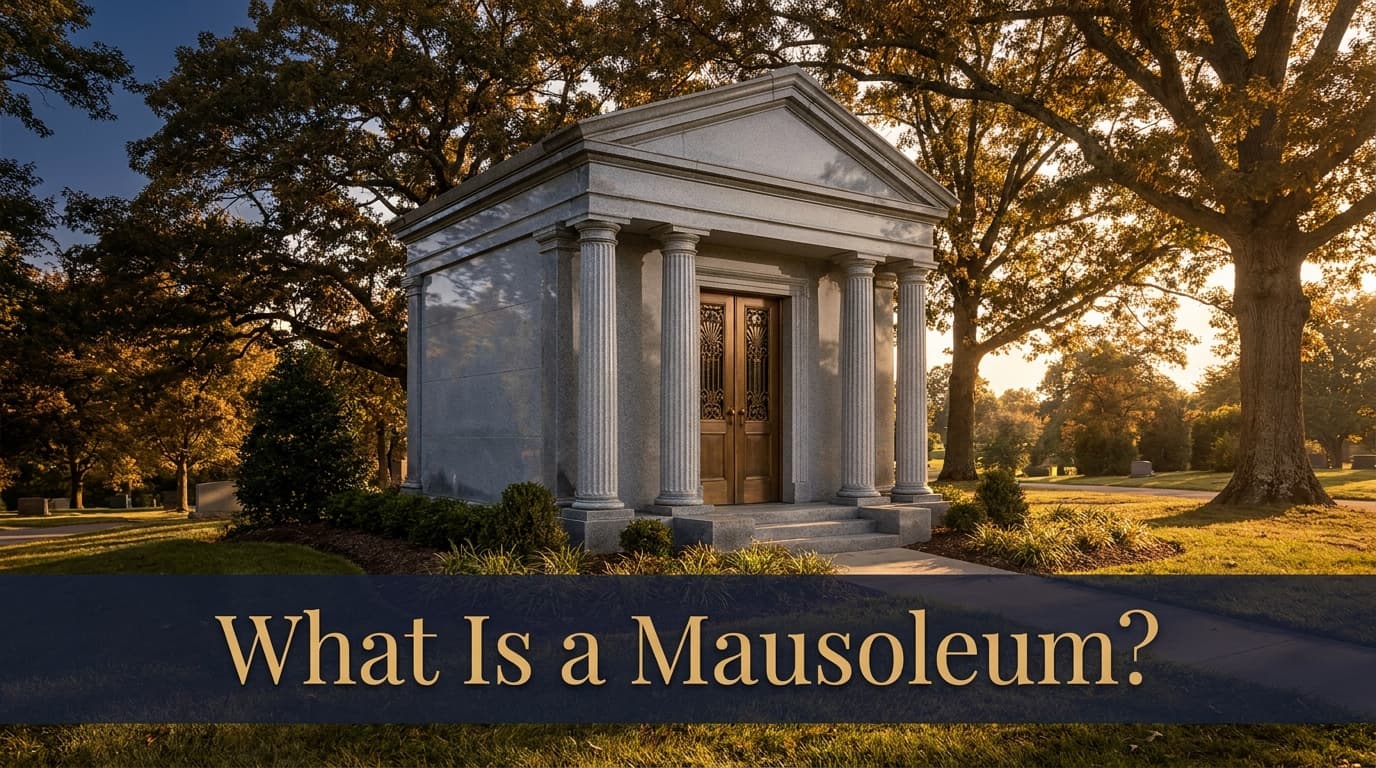
If you have recently begun exploring resting place options — whether for a loved one who has passed away or as part of pre-planning your own arrangements — you may be asking: what is a mausoleum, and is it right for our family? Simply put, a mausoleum is a free-standing structure, usually built of granite or marble, that shelters the remains of one or more people above ground. Instead of a casket being lowered into the earth, it is placed into a sealed chamber called a crypt, which is then closed with a polished stone front bearing the person’s name and dates.
Mausoleums are among humanity’s oldest expressions of love and remembrance. The word itself comes from the Mausoleum at Halicarnassus, the monumental tomb built around 350 BC for King Mausolus — one of the Seven Wonders of the Ancient World. The Taj Mahal is a mausoleum. So are the quiet granite buildings you may have noticed at cemeteries throughout Hudson, Akron, and Cleveland. Far from being reserved for royalty, mausoleum entombment today is a practical, dignified choice available to almost every family.
This guide walks through how mausoleums work, the types available, realistic 2026 costs, how they compare with traditional in-ground burial, and what to know if you are considering one in Northeast Ohio. If you are weighing several memorial options at once, our complete guide to buying a headstone in Hudson, Ohio and our 10 questions to ask before buying a monument are helpful companions.
What Is a Mausoleum Entombment? How the Process Works
Entombment follows the same rhythm as a traditional burial. The family holds whatever service feels right — at a place of worship, a funeral home, or the cemetery itself — and then gathers at the mausoleum for a committal ceremony. The casket is placed into the crypt, and the chamber is sealed.
Modern mausoleums are carefully engineered for permanence and dignity. Each crypt is individually sealed, and the building incorporates discreet ventilation and drainage systems that keep the structure sanitary for generations. The crypt opening is closed with a granite or marble shutter — the surface that carries the inscription. Families often personalize this front with meaningful symbols, lettering styles, and inscriptions just as they would a headstone.
Good to know: Under Ohio law, a mausoleum is formally recognized as a type of cemetery — “a mausoleum for crypt entombments” — which means entombment records, ownership rights, and care standards are protected just as they are for in-ground burial.
The Main Types of Mausoleums
Community Mausoleums: Garden and Chapel Styles
A community (or public) mausoleum is built by the cemetery and shared by many families. It offers the dignity of above-ground entombment at a fraction of the cost of a private structure. Community mausoleums come in two broad styles:
- Garden mausoleums are open-air structures with crypt fronts on the exterior walls, surrounded by landscaping. Visiting feels much like visiting a gravesite — outdoors, among trees and gardens.
- Chapel (walk-in) mausoleums are enclosed buildings with interior corridors of crypts and niches. They offer a quiet, climate-controlled space for reflection in any season — a genuine comfort during Northeast Ohio winters.
Private Family Mausoleums
A private family mausoleum is a custom granite building constructed for a single family, typically holding two to twelve crypts (and often cremation niches as well). Designs range from intimate sarcophagus-style monuments — with no interior space — to walk-in estates with bronze doors, stained glass, and benches for quiet visits. For families who want a lasting gathering place that carries their name across generations, nothing else quite compares. Our craftsmen design private mausoleums the same way we approach every custom monument: starting with your family’s story.
Understanding Mausoleum Crypt Configurations
Crypt placement affects both cost and how couples and families rest together. These are the configurations you will encounter:
| Crypt Type | Who It Holds | Arrangement |
|---|---|---|
| Single crypt | One person | One casket, one memorial front |
| Companion (tandem) crypt | Two people | Caskets end-to-end behind a shared front |
| Side-by-side crypts | Two people | Adjacent crypts with a double-wide memorial front |
| Family (Westminster) crypts | Several family members | Stacked or grouped crypts within one bay |
| Cremation niche | One or two urns | Smaller compartment, glass or granite front |
Couples comparing companion crypts with traditional options may also find our guide to double headstones for husband and wife helpful — the same questions of shared memorialization apply above ground.
How Much Does a Mausoleum Cost in 2026?
Mausoleum cost varies more than almost any other memorial decision, because you are choosing between sharing a building and constructing one. Based on current industry pricing data from sources like Cemetery.com and national monument builders, here is what families can realistically expect in 2026:
| Option | Typical 2026 Price Range |
|---|---|
| Cremation niche (community mausoleum) | $750 – $2,800 |
| Single crypt, outdoor garden mausoleum | $4,000 – $8,000 |
| Single crypt, indoor chapel mausoleum | $10,000 – $20,000 |
| Private mausoleum, 1–2 crypts | $17,000 – $30,000 |
| Private family mausoleum, 4–8 crypts | $42,000 – $80,000 |
| Walk-in private family mausoleum | $99,000 – $1,000,000+ |
Typical cost of a single garden mausoleum crypt in 2026 — often comparable to a plot, vault, and upright monument combined
Remember to budget for the pieces beyond the crypt itself: entombment fees, inscription of the crypt front, and — for private structures — foundation work, delivery, and cemetery land. Granite choice also shapes price and character; our guide to granite colors for memorials shows the range, and our monument pricing guide for Hudson, Ohio explains how memorial budgets come together. We encourage families to think of these figures not as an expense but as an investment in a lasting tribute that will welcome children, grandchildren, and great-grandchildren.
Mausoleum vs Traditional In-Ground Burial
When families weigh mausoleum vs burial, neither choice is better — they simply honor a life in different ways. Here is how the two compare on the practical questions families ask most often:
| Consideration | Mausoleum Entombment | Traditional In-Ground Burial |
|---|---|---|
| Resting place | Sealed crypt above ground, dry and protected | Earth burial, usually with a required vault |
| Visiting | Chapel styles offer indoor, all-season visits | Outdoor graveside visits in every season |
| Memorialization | Engraved crypt front; limited ornament choices | Full freedom of monument shape, color, and carving |
| Typical cost | $4,000–$20,000 per community crypt | Plot + vault + monument, often $5,000–$15,000 combined |
| Availability | Only at cemeteries with mausoleum space | Nearly every cemetery |
Families who choose above-ground entombment often value:
- Comfortable visitation — chapel mausoleums offer shelter from rain, snow, and summer heat, which matters for elderly visitors and Ohio winters.
- A sense of protection — remains rest in a clean, dry, sealed chamber rather than in the earth.
- Togetherness — companion and family crypts keep loved ones physically near one another.
- No vault requirement — the crypt itself replaces the burial vault most cemeteries require for in-ground burial.
Families who choose in-ground burial often prefer the tradition of returning to the earth, the wider choice of cemetery locations, the generally lower cost of a plot with a headstone, and the freedom to personalize a monument or memorial bench at the graveside. Cemetery rules also differ — our overview of cemetery regulations in Northeast Ohio explains why checking your cemetery’s requirements early prevents heartache later.
Cremation and Mausoleums: Niches and Columbarium Spaces
Mausoleums are not only for casketed remains. According to the National Funeral Directors Association’s 2025 Cremation & Burial Report, the U.S. cremation rate reached 63.4% in 2025 and is projected to climb to 82.3% by 2045. Cemeteries have responded by building cremation niches directly into mausoleum walls and adding dedicated columbarium structures.
of American families chose cremation in 2025 (NFDA) — and mausoleum niches give those families a permanent place to visit
A niche holds one or two urns behind a granite, marble, or glass front, and many private family mausoleums now combine casket crypts with niches so that every member of the family — whatever their wishes — can rest together. If cremation is part of your family’s plan, our complete guide to columbariums covers niches, costs, and memorial options in depth, and our columbarium design services page shows what we build for Ohio cemeteries and families.
Building a Private Family Mausoleum in Northeast Ohio: What to Expect
If your family is considering a private mausoleum in the Greater Akron–Cleveland area, here is the journey we walk together:
- Cemetery conversation first. Not every cemetery permits private mausoleums, and those that do have specific lot, setback, and design requirements. We coordinate directly with cemetery management across the more than 4,100 Ohio cemeteries we serve.
- Design consultation. We translate your family’s story into a design — crypt count, granite color, architectural style, religious or personal symbolism, and inscriptions.
- Engineering and foundation. A mausoleum can weigh many tons. A properly engineered reinforced concrete foundation is non-negotiable, and we handle permits, foundation planning, and cemetery approvals.
- Granite quarrying and crafting. Quality private mausoleums are cut from solid granite for permanence. Crafting typically takes several months.
- Installation and dedication. Our crews install the structure, seal and inspect every detail, and many families choose to hold a small dedication gathering.
From first conversation to dedication, most private mausoleum projects take six months to a year — another reason many families begin while pre-planning rather than in the days after a loss.
Caring for a Mausoleum Across Generations
One of the quiet reassurances of community entombment is that the cemetery cares for the building itself — roofing, landscaping, and structural upkeep are typically funded through an endowment included in your purchase. Families remain responsible for the personal touches: keeping the crypt front clean, refreshing flowers in approved vases, and occasionally having inscriptions re-darkened as decades pass.
Granite and marble fronts respond beautifully to gentle care. Clean water, a soft cloth, and patience are almost always enough; harsh household cleaners can etch polished stone and should never be used. The same principles in our guide on how to clean a headstone safely apply to crypt and niche fronts. For private family structures, we recommend a professional inspection every few years — checking seals, drainage, and foundation settling — so that small matters never become large ones. Thoughtful stone selection at the start also pays dividends for a century or more: dense, fine-grained granite resists Northeast Ohio’s freeze-thaw cycles far better than softer stones, which is why we walk every family through material choices during design.
Visiting customs are simple. Chapel buildings post visiting hours, and most ask that flowers be placed only in the provided holders. Many families find that the sheltered setting invites longer, more frequent visits — a grandmother’s birthday remembered out of the January wind, a quiet moment on the way home from work. That ease of returning, year after year, is often what families tell us they treasure most about their choice.

Mausoleums at a glance: types, crypt options, and what families can expect to invest in 2026.
How to Decide if a Mausoleum Is Right for Your Family
There is no wrong answer here — only the answer that brings your family peace. A few gentle questions to talk through together:
- Does the idea of a protected, above-ground resting place bring comfort — or does returning to the earth feel more right?
- Will visitors appreciate an indoor space for reflection during Ohio winters?
- How many family members might eventually rest together — and does a companion crypt, family bay, or private structure serve that hope best?
- Does your preferred cemetery offer community mausoleum space, or permit private construction?
- What feels like the right investment for your family’s circumstances — today and for the generations who will visit?
Whether you are planning ahead or navigating a recent loss, you do not have to figure this out alone. We are a family-owned memorial company in Hudson, Ohio — your neighbors — and we will walk beside you from the first question to the final blessing.
Frequently Asked Questions About Mausoleums
What is a mausoleum used for?
A mausoleum is used for above-ground entombment. Casketed remains rest in sealed chambers called crypts, and cremated remains rest in smaller compartments called niches. Each space is closed with a granite or marble front engraved with the person’s name and dates, giving families a permanent, protected place to visit and remember.
How much does a mausoleum cost in 2026?
In 2026, a cremation niche in a community mausoleum typically costs $750–$2,800, a single crypt in an outdoor garden mausoleum runs $4,000–$8,000, and indoor chapel crypts range from $10,000–$20,000. Private family mausoleums start around $17,000–$25,000 for a single-crypt design and can exceed $100,000 for walk-in structures.
Is a mausoleum better than burial?
Neither is better — it is a matter of what brings your family comfort. Mausoleum entombment offers a clean, dry, protected resting place and sheltered indoor visitation; traditional burial offers the timeless ritual of returning to the earth and broader cemetery and monument choices. Many families decide based on tradition, faith, climate, and cost.
Can cremated remains be placed in a mausoleum?
Yes. Most mausoleums include cremation niches for urns, and urns may often be placed inside a casket crypt alongside a spouse or family member, subject to cemetery rules. With the U.S. cremation rate at 63.4% and rising, niches have become one of the most popular mausoleum options.
Can my family build a private mausoleum in an Ohio cemetery?
In many Ohio cemeteries, yes — with cemetery approval. You will need a suitable lot, an engineered foundation, and a design that meets the cemetery’s standards. A local memorial builder familiar with Northeast Ohio cemetery regulations can coordinate approvals, foundation work, granite crafting, and installation, which together typically take six months to a year.