
The Short Version
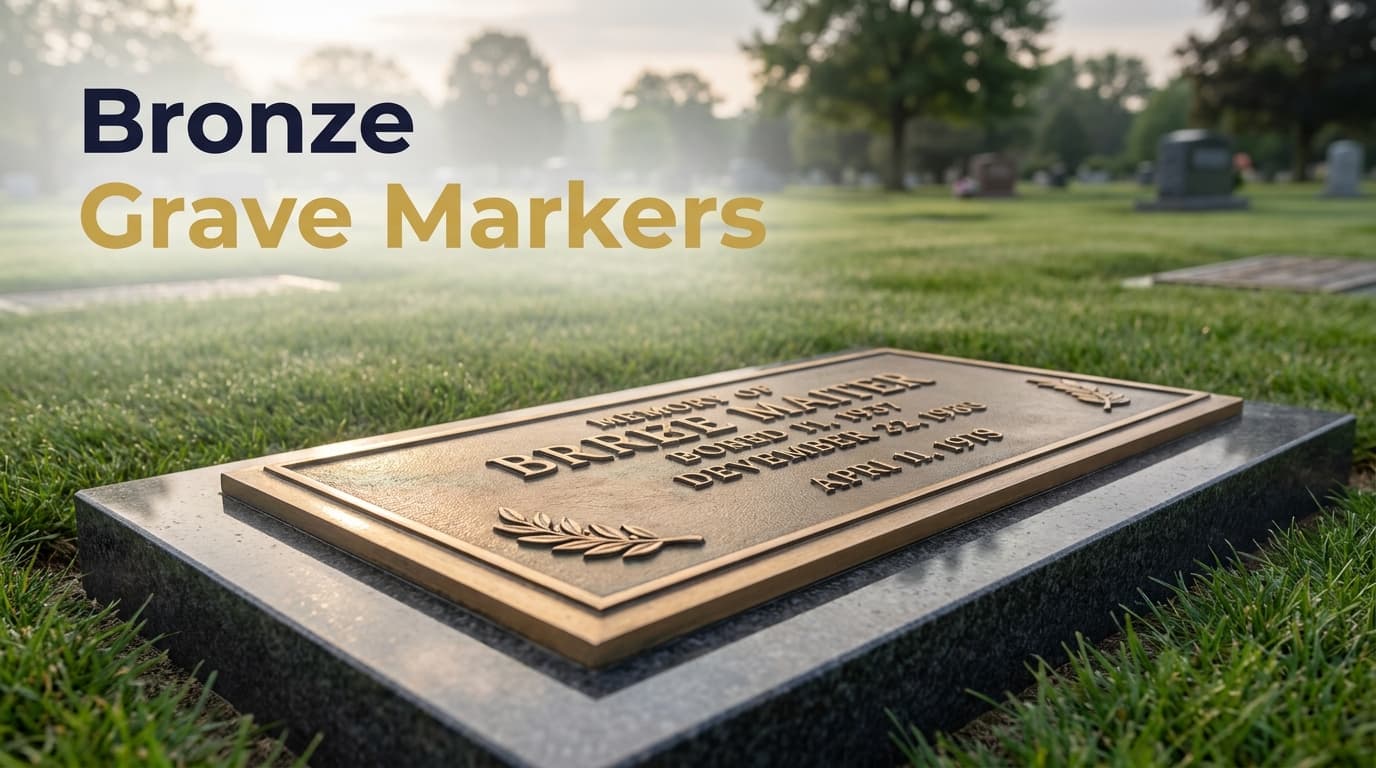
- A bronze grave marker is a cast metal memorial plaque, usually mounted on a granite base, with raised lettering and designs that stand out from the surface — prized for its warm color, crisp detail, and heirloom feel.
- Most bronze markers are flat or lawn-level, which many cemeteries require in their memorial-park sections, making bronze a popular choice where upright stones are not allowed.
- Single bronze markers typically cost $1,300 to $3,500, and companion bronze markers generally run $3,000 to $6,000, before cemetery foundation and setting fees of roughly $150 to $800.
- A well-cast bronze marker can last 50 years or more and develops a soft, natural patina over time; a gentle occasional cleaning keeps it looking its best.
- Eligible veterans can receive a free bronze marker, niche marker, or medallion from the VA — and we help Northeast Ohio families craft and set bronze memorials of every kind, from our home in Hudson.
What Is a Bronze Grave Marker?
A bronze grave marker is a memorial made from cast bronze — a warm, golden-brown metal alloy that has been used to honor the dead for thousands of years. The name, dates, and any designs are cast in relief, meaning the lettering and artwork rise up from the surface rather than being carved into it. This raised detail is what gives bronze its distinctive, dimensional character: run your fingers across the surface and you can feel a loved one’s name lifted gently toward you.
Most bronze markers are set on a granite base and rest flat, level with the lawn, though bronze plaques are also mounted on upright monuments, benches, columbarium niches, and family mausoleums. Choosing a memorial is one of the most personal decisions a family ever makes, and it deserves clear, gentle guidance rather than a sales pitch. This guide walks through what bronze markers are, how they compare to granite, honest 2026 pricing, veteran benefits, and how to care for bronze — so you can picture the right memorial without feeling rushed. If you are weighing your options among lawn-level memorials, our guide to flat grave markers is a helpful companion to this one.
a properly cast and maintained bronze marker can stand as a lasting tribute for generations
Why Families Choose Bronze
Bronze has an unmistakable warmth that stone cannot quite match. Its soft golden tone feels timeless and dignified, and the raised, hand-finished detail gives every marker a sense of craftsmanship and permanence. For many families, a bronze memorial carries an heirloom quality — the same material used for statues, church bells, and monuments that have endured for centuries.
There is also a practical reason bronze is so common. A great many modern cemeteries — especially memorial-park and lawn sections — require flat markers so that grounds can be mowed easily and the landscape stays open and uniform. In these sections, a bronze-on-granite marker is often the most elegant option available. Bronze resists cracking and impact in ways stone does not, and its cast lettering stays crisp and legible for decades. Families who love the idea of a raised, sculptural memorial — or who simply prefer the warmth of metal to the coolness of stone — are often drawn to bronze from the first moment they see it.
Bronze vs. Granite: An Honest Comparison
One of the most common questions families ask is whether to choose bronze or granite. The truth is that both are excellent, enduring choices — the right one depends on your cemetery’s rules, the look you love, and how you feel about a memorial that changes gently over time. Here is a clear, side-by-side look.
| Consideration | Bronze | Granite |
|---|---|---|
| Appearance | Warm metal, raised 3-D lettering and art | Wide color palette, carved or etched detail |
| Over time | Develops a natural patina; occasional care preserves the finish | Colors and finish stay very stable for centuries |
| Durability | Resists cracking and impact; 50+ years | Extremely hard and weatherproof; hundreds of years |
| Maintenance | Gentle cleaning, occasional waxing to keep original look | Very low; a periodic wash is all it needs |
| Typical use | Flat markers, plaques, niches, benches | Upright monuments, flat markers, bases |
In short, granite tends to win on sheer low-maintenance permanence, while bronze wins on warmth, raised sculptural detail, and impact resistance. Neither is “better” — they are simply different kinds of beautiful. If you would like to weigh the two in more depth, our dedicated comparison of bronze markers vs. granite headstones goes further, and our complete guide to granite headstones covers the stone side in detail.

Bronze grave markers at a glance: how they are made, how bronze compares to granite, standard sizes, 2026 costs, and simple care.
Types of Bronze Memorials
Bronze is remarkably versatile, and it appears in several forms throughout a cemetery. Knowing the main types helps you picture what will suit your loved one and your cemetery’s section.
Flat Bronze Grave Markers
The most common form, a flat bronze marker is a cast plaque mounted on a granite base and set level with the lawn. Single markers commonly measure around 24 by 12 inches, with room for a name, dates, a short epitaph, and an emblem or two. These are the markers most memorial-park cemeteries require.
Companion Bronze Markers
A companion bronze marker honors two people — most often a husband and wife — on one shared plaque, typically around 44 by 14 inches. Many couples choose a companion memorial while both are living, adding the second date later. Because it uses one larger casting instead of two, a companion marker often costs less than two singles. Our guide to double headstones for husband and wife explores companion designs in depth.
Bronze Plaques on Upright Monuments
Bronze and granite pair beautifully. A bronze plaque mounted on a granite die or base combines the warmth of metal with the permanence of stone — a look many families cherish. This approach also appears on memorial benches and dedication monuments.
Bronze Niche Markers
For cremated remains placed in a columbarium, a small bronze niche marker seals and personalizes the front of the niche. If you are exploring cremation memorial options, our complete columbarium guide explains how niches and their markers work.
Bronze Medallions and Emblems
Smaller bronze medallions can be affixed to an existing headstone to signify military service, membership, or faith — a meaningful way to add a detail to a memorial that already stands.
A simple way to think about it: bronze is the plaque that carries the story, and granite is often the base that holds it. Many of the most beloved memorials use both together.
What Bronze Grave Markers Cost in 2026
Cost is one of the first questions families have, and it deserves a clear, honest answer. The price of a bronze marker depends on its size, the thickness and detail of the casting, the granite base, and any custom artwork or portraits. Here is what families typically invest in 2026.
| Type of Bronze Marker | Typical 2026 Range |
|---|---|
| Single flat bronze marker (on granite base) | $1,300 – $3,500 |
| Companion (double) bronze marker | $3,000 – $6,000 |
| Custom artwork, portraits, or premium detail | $4,000 and up |
| Cemetery foundation & setting | $150 – $800 (usually separate) |
A bronze marker often costs a little more than a comparable granite flat marker because casting metal is labor-intensive, but the raised detail and warm finish are what draw families to it. For a full breakdown of every factor that shapes price — from lettering to installation — see our complete headstone cost guide. We are always glad to give a clear, itemized estimate so there are no surprises.
A memorial is not an expense so much as a lasting tribute — a marker that will carry your loved one’s name gently forward for generations. We help families across every budget find a design that feels right and endures.
Bronze Markers for Veterans
If your loved one served, they may be entitled to a memorial at no cost. The U.S. Department of Veterans Affairs provides a free bronze grave marker for eligible veterans, along with several bronze options depending on how and where they are laid to rest. Flat bronze markers are available for graves, and a bronze niche marker is provided for cremated remains placed in a columbarium. Mounting hardware is included.
For a veteran whose grave is already marked with a privately purchased headstone, the VA offers a bronze medallion that can be affixed to the existing stone to signify their service — a graceful way to honor military service without replacing a marker the family already loves. Applications are made using VA Form 40-1330, and eligibility rules apply. Our full VA headstones for veterans guide walks through eligibility, the application, and inscription options step by step, and you can learn more about our veteran memorial services if you would like a hand with the process.
How Bronze Ages: Patina and Care
One of the most beautiful things about bronze is that it is alive to time. As the metal is exposed to air and weather, it slowly oxidizes and develops a patina — a softening of tone that can deepen to warm browns and gentle blue-green highlights. Many families love this natural aging, feeling it gives a marker character and a sense of history. Others prefer to keep the original bright bronze finish, and that is a personal choice with no wrong answer.
Caring for bronze is simple. A gentle wash with mild soap and water a few times a year removes dirt and pollen, and an occasional coat of protective wax helps preserve the original finish if that is the look you prefer. Avoid harsh chemicals or abrasive tools, which can damage the surface. If your family also has a granite headstone or base to care for, our guide on how to clean a headstone covers the safe way to keep stone looking its best, too.
Designing a Bronze Marker: Lettering, Emblems, and Finishes
A bronze marker offers a surprising amount of room for personalization. The background can be finished in different textures — a smooth or lightly stippled field — and the raised letters and art can be left bright or given a darker patinated background for contrast. Families choose from a wide library of cast emblems: religious symbols, military insignia, florals, praying hands, doves, and scenes from nature, along with borders that frame the whole memorial.
The words themselves matter most of all. Names, dates, and a short line of remembrance are cast in relief, and even a small marker holds space for a meaningful phrase. If you are searching for the right words, our collection of headstone inscription ideas offers gentle inspiration, and our guide to memorial lettering styles can help you picture how the inscription will read. There is no need to rush this part — we help families find wording that feels true.
Cemetery Approval and Installation
Before any marker is set, the cemetery must approve the design and, in most cases, a concrete foundation must be poured to hold the granite base level through the seasons. Every cemetery has its own rules about marker size, style, and placement, and in Northeast Ohio those rules can differ from one cemetery — even one section — to the next. Some sections require bronze, some require granite, and some allow either. Navigating this is where a local monument maker earns their keep.
When you work with us, we handle the entire process: confirming your cemetery’s requirements, preparing the paperwork, pouring the foundation, and setting the marker with care. You can read more about the local landscape in our guide to cemetery regulations in Northeast Ohio, and you can check whether we serve your cemetery on our cemeteries we serve page. We work with more than 4,100 cemeteries across Ohio, from Hudson and Stow to Akron, Cleveland, and beyond.
How to Choose the Right Bronze Marker
With so many choices, it helps to move through the decision one gentle step at a time. Here is a simple roadmap families find reassuring.
1. Confirm the cemetery’s rules first. Knowing whether your section requires bronze, granite, or either — and the allowed size — narrows every other choice. We will gather these details for you.
2. Decide between single and companion. Are you honoring one person or planning a shared memorial for a couple? This shapes the size and layout of the plaque.
3. Choose the finish and background. Decide whether you love bright bronze or a patinated background, and pick a granite base color that complements it.
4. Select emblems and borders. Choose cast symbols, artwork, or a border that reflect your loved one’s faith, service, or passions.
5. Write the inscription. Choose the names, dates, and words that will be read for generations. We help families find wording that feels right.
Crafted With Care in Hudson, Ohio
Reserve Memorials is a family-owned company based in Hudson, Ohio — your neighbors, not a faceless catalog. We design and craft custom bronze markers, monuments, and headstones for families throughout Northeast Ohio and the Greater Akron-Cleveland area, guiding you from the first sketch through cemetery approval, foundation, and installation. Every memorial we make is meant to reflect the life, legacy, and love of the person it honors.
If you are beginning to think about a bronze marker for a loved one — or planning ahead for yourself or a spouse — we would be honored to help. There is no pressure and no rush, only a caring conversation about what feels right for your family.
Frequently Asked Questions